Hypnotherapy Methods: How Hypnotherapists Work
The main ways hypnotherapists work, from suggestion to regression and parts work, and how each one is learned.
By Farhan Zahid, CCHt16 min read
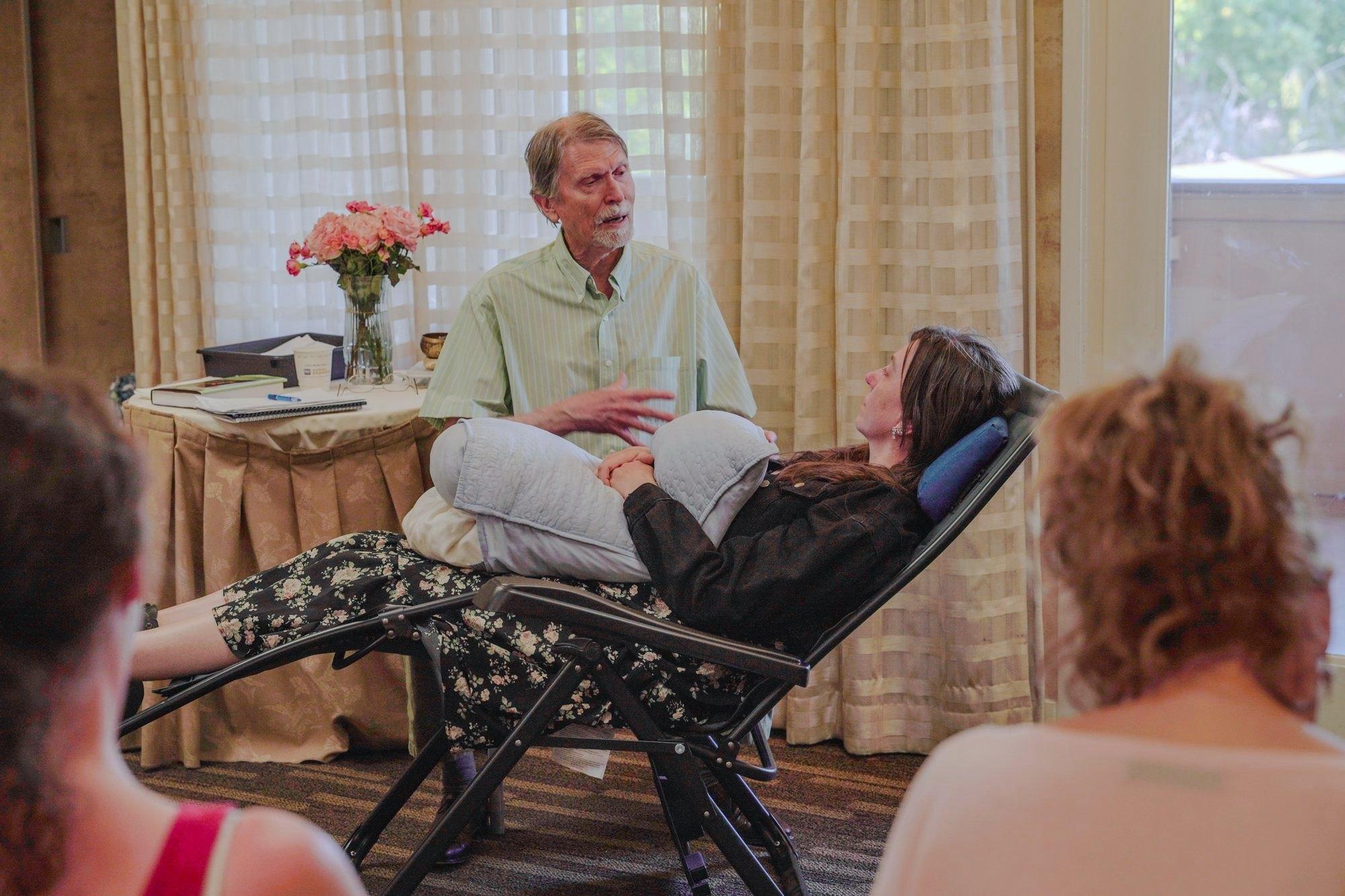
In shortHypnotherapy methods are the different ways a hypnotherapist works with a client in hypnosis. They range from suggestion and imagery to regression, ideomotor signals and parts work, and an array of others. The skill lies in choosing the ones that fit the person and what emerges in the moment.
Perhaps you’ve wondered what actually happens once a client closes their eyes. Perhaps you’re thinking of seeing a hypnotherapist, and want to know what they might do. Or perhaps you feel drawn to the work, and wonder what you would learn. This guide is for each of you.
It’s written from inside the room, by a clinical hypnotherapist who trained at the Hypnotherapy Training Institute (HTI) and now teaches there. It explains the main techniques and types of hypnotherapy in plain words, and how they differ. New to the subject? Begin with what hypnotherapy is.
Hypnotherapy isn’t one technique. Choosing well takes two things: breadth, so there are real choices to draw on, and depth, so each one is used well.
Some are single techniques, such as a suggestion. Others are whole approaches, such as Ericksonian work, a gentle and indirect style, or Gestalt work, which gives a voice to parts of an experience. A few draw on other traditions, such as qigong. They aren’t rivals. Several are often combined in one session, and adjusted as the client responds. Imagery or metaphor can appear inside almost any of them.
| What they are | Different ways of working with a client in hypnosis |
|---|---|
| How one is chosen | By the client’s goals and responses, before and during a session |
| Who leads | The client. The hypnotherapist follows and adapts |
| How they’re learned | Watched live, experienced, practiced under supervision, then discussed |
Two ways in. Thinking of seeing a hypnotherapist? Start with how a hypnotherapist chooses a method, then the moment from class under Regression. Thinking of becoming one, or widening your practice? Start with the methods themselves, then how they’re learned.
How does a hypnotherapist choose a method?
A hypnotherapist chooses a method by listening first. Before any hypnosis, there is a conversation.
What does the client want to change? What is it like for them now? Together, they agree on goals. The method follows from the person, not the other way round.
Why so many methods? Because people take in experience differently. One responds to a plain suggestion. Another needs a story, an image, or a way to let a deeper part of them answer.
Many goals can be worked with directly, through suggestion and imagery. Others seem to have roots in an earlier experience, and may call for regression, revisiting earlier experiences, or ideomotor exploration, which asks the subconscious simple questions. Choosing continues once hypnosis begins. A skilled hypnotherapist watches the breath, the face and the smallest movements, and adapts as the session unfolds.
Randal Churchill, who founded HTI in 1978, sums up what good therapy needs in Churchill’s Recipe for Outstanding Therapy:
- Client: motivated.
- Therapist: compassionate and centered.
- Together: good rapport and a positive yet realistic expectancy.
- Training: a solid foundation of methods.
Every method in this guide belongs to that last ingredient. None of them works alone. Each needs to be chosen intelligently, and used with care and professionalism.
In Regression Hypnotherapy, Randal quotes the psychologist Sidney Jourard: “The most important thing you bring to your client is yourself. Your methodology is additional.”
Part of a hypnotherapist’s responsibility is knowing which approach fits, and how to apply it skillfully. It’s also knowing when it’s best to refer a client to another professional.1
Suggestion, direct and indirect
A suggestion is an idea offered to a client in hypnosis. A skilled hypnotherapist words it so it feels natural to the client’s subconscious mind. The client can then respond in their own way.
A direct suggestion says plainly what the client has asked for. It might be a calm breath before speaking, or a steady feeling where they used to feel unsettled. An indirect suggestion works by implication, by choice or through a story. It leaves the client room to respond: “you may notice,” “perhaps sooner than you expect.”
Neither is better in every case. In Randal’s experience, most people respond well to a range of styles, used skillfully. The skill is in knowing which this client will welcome, and in shaping the words with care.
Some methods call for a more directive manner. Three you’ll meet in this guide:
- The affect bridge, which follows a feeling back to an earlier time it was felt.
- Gestalt dialogue, in which a client speaks with a part of their experience, such as a feeling or a person from their past.
- Ideomotor questioning, which asks the subconscious simple questions, answered by small finger movements.
Wording is only part of it. As Randal writes, “There is no such thing as a simple, independent direct suggestion.” A voice, a pause, the room itself: all of it speaks to the client too.
Randal explores the distinction further in Direct vs Indirect Suggestion.
Imagery and metaphor
The subconscious is a source of creativity and imagination. Imagery and metaphor work through the imagination, which in hypnosis often becomes vivid.
A hypnotic metaphor is a story whose meaning the client draws for themselves. A tale about a tree that bends in a storm, and stays rooted, may never mention the client’s personal experience. Yet it can speak to it directly, through a second layer of meaning. Because the client finds the meaning, it tends to feel like their own.
One of the first imagery methods hypnotherapists learn is the Inner Sanctuary. It’s a place of calm and safety the client creates in their imagination, shaped by their own senses. It is perfectly created for them, because it is created by them. The client can return to it within a session, and in self-hypnosis.
Ericksonian hypnosis
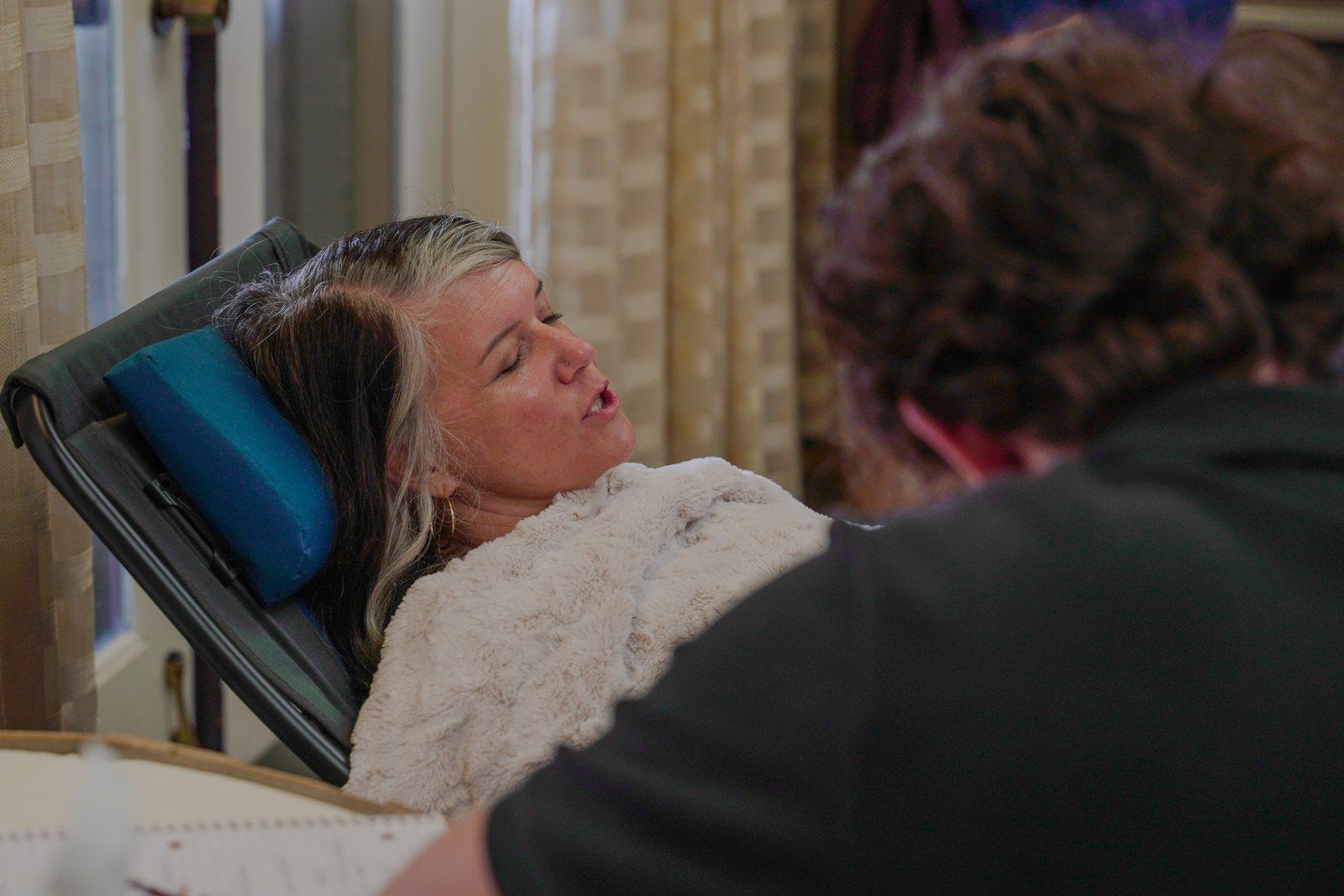
Ericksonian hypnosis is the permissive, indirect approach associated with Milton H. Erickson. Rather than relying mainly on direct instructions, it builds on what the client brings into the session: their words, their experiences, their way of responding, even their hesitations.
Erickson set out his approach with Ernest and Sheila Rossi in Hypnotic Realities (1976). In practice, an Ericksonian hypnotherapist might weave suggestions into conversation. They might offer choices that all lead somewhere helpful. Or they might tell a story that lets the client reach an insight on their own.
Learning permissive and directive styles side by side lets a hypnotherapist choose between them. They can blend them, too, for the person in front of them.
Erickson’s work later became one of the foundations of NLP.
Ideomotor signals
Ideomotor signals are small, unconscious finger movements that give simple answers, such as “yes,” “no” or “I don’t know.” Skilled hypnotherapists use them to check with the client’s subconscious when guiding the work.
The hypnotherapist asks a simple question and waits. The answer often comes as a slow, subtle, involuntary movement of a finger. When Keith Thompson experienced it in his own session, his index finger lifted gently, “to my surprise.”
Ideomotor methods have been part of hypnotherapy since the 1950s.2 They serve two purposes:
- Exploring. Questions can help explore when a feeling seems to have begun, or what may lie beneath an issue. What emerges is worked with for what it means to the client now, not treated as proof of what happened.3
- Protecting. A check before emotional work begins, and again along the way, helps keep the work within safe boundaries.
The signals are one guide among several, alongside conversation, close observation and the client’s own willingness to continue. The client stays in charge throughout. Randal describes how he uses these signals in The Transformational Nature of Hypnotherapy.
Regression
In regression hypnotherapy, a client in hypnosis returns in memory and feeling to earlier experiences connected to something in their life today. It may be used when a present-day difficulty seems to have roots in the past. That might be a reaction stronger than the moment calls for, or a belief the client inherited, or took on somewhere along the way.
What happened in the past has already happened. As Randal writes in Regression Hypnotherapy, “what makes a past event important is the way we frame it and manifest it in the here and now.” The work is with what a person carries from it: the feeling, the conclusion they drew, the belief that followed.
Before emotional work begins, and along the way, the hypnotherapist checks with the client’s subconscious. Ideomotor signals often help, alongside conversation and close observation. Memories that surface in hypnosis can feel vivid without being exact, so a skilled hypnotherapist works with what they mean to the client now.3 Care is taken not to lead the client, to avoid creating false memories. Thorough training gives careful guidance on this.
One widely used method is the affect bridge, described by the psychologist John Watkins in 1971. It uses the feeling itself as a bridge back to an earlier time it was felt.
The earlier experience may then be reviewed from a calm distance, in detached regression. Or it may be felt fully, in attached regression. Each has its place. Either can bring real insight, and sometimes an emotional release, though a strong release isn’t always needed.
The client leads. The hypnotherapist follows closely and guides, ready to slow down, pause or change course.
In the room. A class volunteer wanted to work on a feeling of being trapped. It came up in crowded or confined places. He expected the session to be intense, and said so. Randal checked first with his subconscious, through ideomotor signals. Then he used an affect bridge, and a Gestalt dialogue with the people in an early experience. In that moment, the volunteer found them differently than he had imagined. “The big breakthrough for me,” he said a week later, “was realizing that everyone in the room was on my side and doing their best.” The strong emotional release he had expected never came. It wasn’t needed.
For the full picture, see What Is Regression Hypnotherapy? Randal’s own account is in Regression Hypnotherapy and Its Profound Potential.
Gestalt in hypnotherapy
Gestalt work helps a client experience a difficulty as a whole, in the present. It goes further than talking about it. A client might give a voice to a feeling, to someone from their past or to an image from a dream. Then they speak with it, as though it were here now.
Gestalt therapy was set out by Frederick (Fritz) Perls, Ralph Hefferline and Paul Goodman in Gestalt Therapy (1951). Its attention to present experience sits naturally with hypnosis, where feelings and images are often closer to the surface.
In Randal’s account, Gil Boyne first brought Gestalt and other methods together with hypnosis, in the 1960s. Within a Gestalt process, Randal observes, “very little needs to be considered resistance.” Almost anything that comes up for the client, in his words, “is a valuable part of the process that can be utilized.” For a client, that can be a relief. Nothing they bring is wrong.
Cheryl Canfield reflects on this work in Self-Reflection, Hypnosis and Gestalt.
Inner child work
Inner child work helps a client connect with the younger self they still carry, as they experience it now. That might be the child who felt the fear, drew the conclusion or went without what they needed. Like any memory in hypnosis, what surfaces can feel vivid without being exact.3 The work is with what it means to the client now.
In hypnosis, the adult client can meet that younger self. They can embody what was missing then. If that child lacked a loving parent, the adult can become that loving presence, offering understanding, comfort and protection, or simply seeing and hearing them. It’s often a quiet, tender part of the work, and the comfort comes from the client themselves.
Inner child work often follows regression, and can also stand on its own. Either way, the hypnotherapist helps the client bring what they’ve found back into the present.
Parts therapy
Parts therapy works with the different parts of a person that can want different things. Most of us know the feeling: part of me wants to change, and part of me doesn’t.
In hypnosis, the hypnotherapist helps the client identify those parts. Each part is heard: what it intends, and what it needs. Often, its intention is protective. Then the parts find an agreement they can all accept.
Charles Tebbetts developed parts therapy into a client-centered approach, building on the work of Paul Federn.4 Further forms bring several parts together around a decision or a repeating pattern. Two examples are the committee form and the executive conference.
“It’s fine for therapists to emphasize a particular set of methods, but I would like to encourage all hypnotherapists to not limit their training to one or more packages of techniques or styles.”
NLP: a sister discipline
Neuro-linguistic programming (NLP) isn’t a hypnotherapy method. It’s a close relative. In the simplest terms, it’s the art and science of communication.
NLP grew, in part, from the study of a hypnotherapist. In the 1970s, its founders, Richard Bandler and John Grinder, studied Milton H. Erickson’s hypnotic work closely. They published what they found in 1975.
At its heart is a simple idea. People don’t respond to events directly. They respond to the inner picture they build of them, from images, sounds, feelings and words.
Here’s one way to see it. Every client lives inside a house they built. Each doorway, wall and window is a filter, formed from memories, interpretations, images and old decisions. Then they forgot they built it, and took it for reality.
Every experience, and every communication they receive, passes through that house and its filters. What comes out the other side is shaped by the house they built. That’s why two people can react so differently to the same experience, or the same words.
NLP helps a hypnotherapist understand that house: where the rooms are, where the doors are, how it’s wired. The client still owns the house. If they wish, the hypnotherapist helps them renovate it, from the inside. At the very least, a skilled hypnotherapist can move through the house with care, so suggestions land the way they’re meant.
NLP has its own tools and techniques, many of which fit naturally within hypnotherapy:
- Anchors. Linking a resourceful state, such as calm or confidence, to a touch, a word or a gesture, so the client can return to it.
- Reframing. Helping a client see an experience in a way that changes its meaning.
- Pacing and leading. Matching the client’s experience first, then gently guiding it somewhere new.
- Representational systems. Noticing the sensory language a client uses, such as pictures, sounds or feelings, and speaking in the same terms. These are clues to how a person is organizing experience right now, not personality types.
Within hypnotherapy, these are tools for rapport and language, not stand-alone treatments. Used together, the two often strengthen each other.
How are hypnotherapy methods learned?
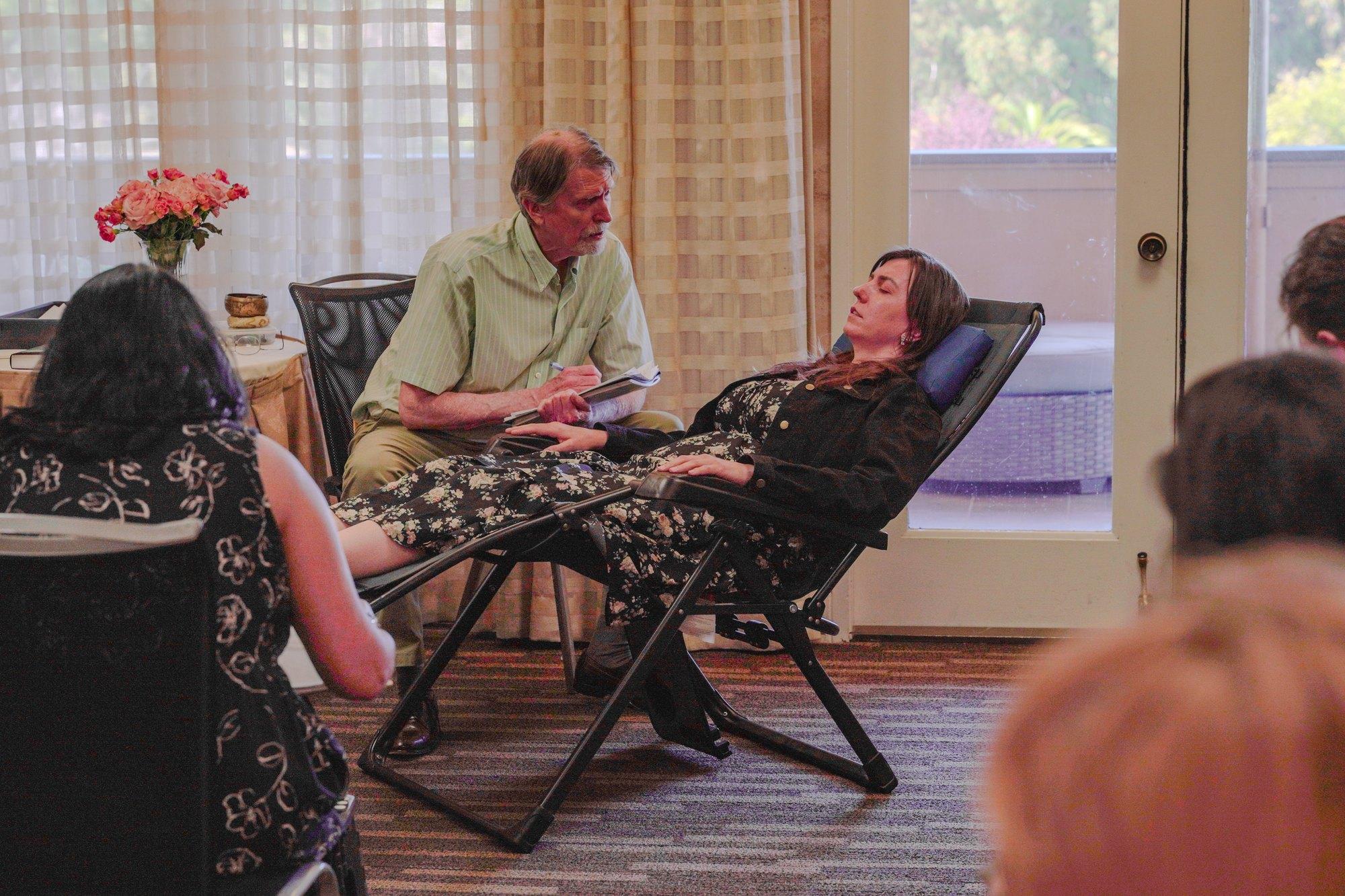
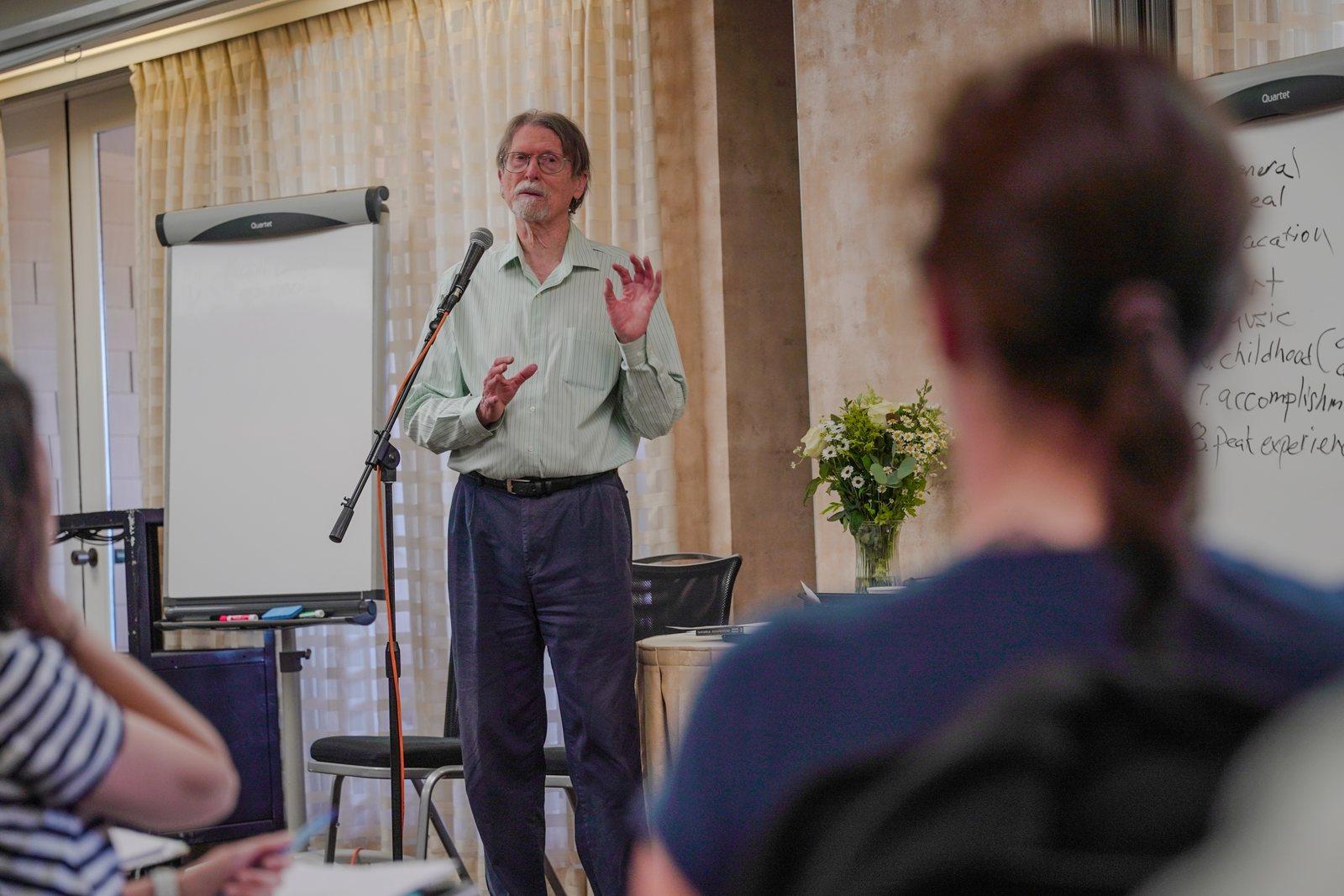
Thorough training teaches each of these methods, and many more, in four steps. You watch it demonstrated live, often with a volunteer working on a real issue. You experience it yourself.5 Then you practice it with experienced faculty supervising, and talk through what happened.
Learning in the room matters most for the subtle work. A breath that changes, a micro-expression, a client’s response to touch, a finger lifting subtly to answer a question: these are easiest to notice up close, and they’re only a few of many. What classmates share should stay in the class, so everyone can share privately and learn safely.
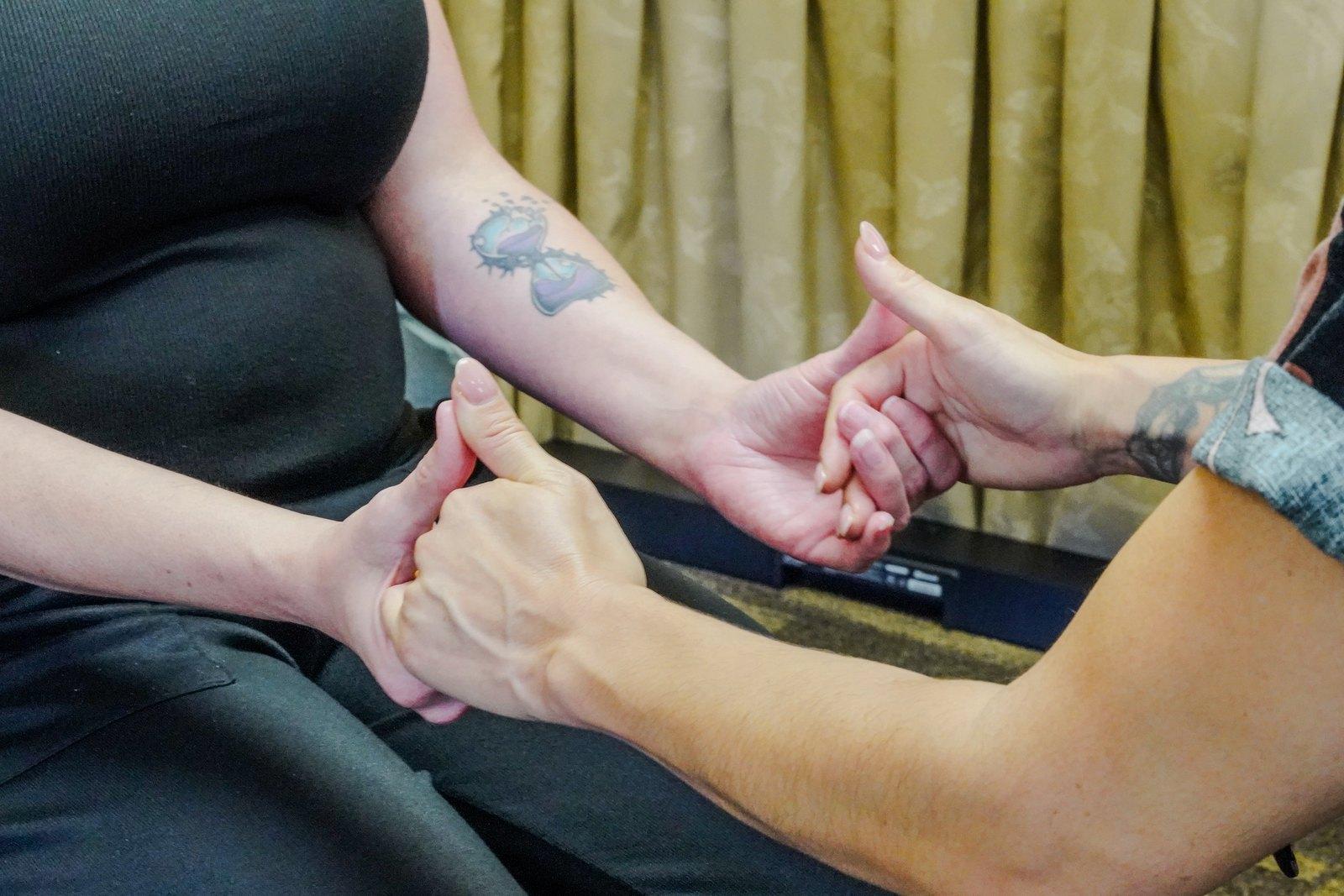
Some methods use touch: a hand on the shoulder to deepen hypnosis, for example, or a touch to anchor a calm state.5 It’s one part of the work that can only really be learned in the room. You learn it from both sides. You give it and you receive it, so you know how its pressure, warmth and timing land for the person in the chair.
Many skilled hypnotherapists use these methods both in person and online. Thorough training prepares you for both.
Methods developed by HTI’s teachers
Most of HTI’s faculty teach methods they developed themselves. In HTI’s training, you learn each one from the teacher who originated or developed it.
Hypnotic Dreamwork™, with Randal Churchill. In Randal’s words, it integrates “Gestalt dreamwork with hypnotherapy.” In hypnosis, the client re-enters a dream. Through Gestalt dialogue, its parts speak with one another, and the dream’s meaning emerges from that dialogue. Randal sets it out in his book Become the Dream.
Churchill’s Imprint Method™, with Randal Churchill. The method works to transform subconscious beliefs formed by an imprint. Randal defines an imprint as “a powerful, emotional, single impact learning experience that can affect a person … in many cases for a lifetime.”
Crossroads Therapy and the Sun Passage process, with Lyn “Pili” Moreno. His original techniques and processes are rooted in the traditional values, spiritual principles and aloha of Hawaiʻi. He has made them practical for hypnotherapists.
Crossroads Therapy is for the moments when a client stands at a crossroads in life. It helps strengthen their confidence in making a decision. He is known especially for fostering connection, easing grief and enhancing creativity.1
The Emotional Balancing Process™, with Gaye Gibson. Gaye’s two-phase process integrates Emotional Freedom Techniques (EFT) with the principles of Be Set Free Fast (BSFF).
Qigong Energy for Hypnotherapists, with Kaleo Ching. Kaleo is a Certified Medical Qigong Practitioner, born and raised in Hawaiʻi, with more than 45 years of qigong practice. He often teaches with Elise Ching.
In hypnotherapy, he uses qigong breathing, gentle movement and traditional acupoints to help a client settle into hypnosis. The same practices can help anchor the experience in the body.1,5
The Compounded Hypnotic Technique™ and Exploring the Shadow, with Gary Josephson. Gary has been a clinical hypnotherapist for more than 30 years. He trained with Randal and with Gil Boyne, and developed both methods. The Compounded Hypnotic Technique™ combines several techniques in one session, and the client’s responses guide it, moment to moment.
Exploring the Shadow works with a pattern that once formed to protect a person, and no longer serves them. It works alongside that protection, not against it, through five phases: awareness, protection, origin, integration and embodiment.
Grief recovery, with Terry Stout, LMFT. Terry has been a psychotherapist for more than 35 years, and is a Grief Recovery Specialist. He teaches his own approach to grief recovery.1 It draws on the Inka Medicine Wheel and its traditions, which he has studied and taught since 2001.
HTI also teaches methods developed elsewhere, such as Gil Boyne’s Transforming Therapy™.
Ormond McGill, known as “the Dean of American Hypnotists,” taught at HTI from 1981 to 2005. Highlights of his Quantum Hypnotherapy™ seminar are taught in Level 2, along with McGill MasterMind Hypnosis™. His gentle warmth and wisdom are still carried forward in HTI’s classes.
You can meet every teacher on the Faculty page, and find Randal’s books on the Books page.
At HTI, level by level
HTI teaches regression in real depth, both detached and cathartic, from Level 2. It is explored extensively with volunteers in Levels 3 and 4. Live demonstrations show it, with thorough guidance on avoiding false memories. Randal’s Regression Hypnotherapy: Transcripts of Transformation and its companion volume, Catharsis in Regression Hypnotherapy, are the course texts.
Patricia Reynolds Sørbye teaches parts therapy by executive conference. I teach NLP Fundamentals for Hypnotherapists in Level 2.
Hypnotherapist Certification, Levels 1–4, is 200 hours of training. It gives a thorough grounding in the core methods in this guide. After Level 4 you are a Certified Hypnotherapist, eligible for ACHE certification.6 Graduates who want to go further can continue to Clinical Hypnotherapist Certification by taking any two of Levels 5–7.
| Method | Where it’s taught at HTI |
|---|---|
| Suggestion, direct and indirect | Level 1, widened in Level 2 |
| Imagery, hypnotic metaphor and the Inner Sanctuary | Level 1 |
| Ericksonian methods | Level 1 |
| Ideomotor signals | Level 1, protective and exploratory methods in Level 3, advanced uncovering in Level 4, further in Level 6 |
| Regression | From Level 2, explored extensively in Levels 3 and 4, continued in the graduate levels |
| The affect bridge | Level 3 |
| Gestalt | Level 3, further forms in Level 5 |
| Inner child work | Level 1, and in depth in Level 3 |
| Parts therapy | Level 4, the committee form in Level 5, executive conference or family council in Level 6 |
| NLP Fundamentals for Hypnotherapists | Level 2, Part 2 in Level 7 |
| Hypnotic Dreamwork™ | Level 3, more depth in Level 5 |
| Churchill’s Imprint Method™ | Level 4 |
| Crossroads Therapy | Level 3 |
| Gil Boyne’s Transforming Therapy™ | Level 3 |
| The Emotional Balancing Process™ | Level 4 |
| Grief recovery, drawing on the Inka Medicine Wheel | Level 5 |
| The Compounded Hypnotic Technique™ | Level 6 |
| Qigong Energy for Hypnotherapists | Level 6 |
| Exploring the Shadow | Level 7 |
Level 7, the Integrative Master Class, is new in fall 2027. It’s open to HTI graduates who have completed Levels 1–4.
Experiencing each method yourself is part of the learning.5 Kenneth A. Kern described what follows each demonstration:
“Following these clinical demonstrations, students immediately get to practice the components of these same hypnotic approaches, under close supervision.”
Watching a classmate’s demonstration can move you, too. Jill Symons wrote:
“Even though I was never the client in front of the class, I still received powerful healing experiences which I am still processing today… To witness someone else bravely sharing his/her pain and subsequent healing through hypnosis, was not only an honor, but a chance to have the gift of a shared healing for myself.”
Writing of her training with Randal Churchill and Cheryl Canfield, Victoria West named both breadth and depth:
“You certainly covered a broad range of modalities in your classes, but I was most impressed by your depth, especially during the therapy demonstrations.”
A sample of graduates’ own words, shared freely with no payment or incentive. Every experience is individual.
A closing word
What drew me to hypnotherapy was how versatile, effective and powerful it can be. I had trained as a yoga nidra instructor, and that’s what first introduced me to its ideas. The two share a lot in their approach.
I also love how hypnotherapy can go directly to the root of an issue, and work with it there. At its best, the shifts feel effortless. Life simply becomes easier, because your behavior has changed, and the change carries on through your day without your having to consciously think about it.
That’s what still moves me about this work.
Thorough training gives you versatility and agility. Breadth gives you choices. Depth lets you choose well. Then what matters most is being fully present with the person in front of you.
Sometimes the most important moment in a session is the smallest: a breath that slows, a finger that lifts, a micro-expression that holds for just a second. Noticing it, and knowing how to respond to what emerges, is how you help someone find their way to change.