Soon, someone will close their eyes and trust your voice with their deepest hopes. Train for that moment.
Become a Certified Hypnotherapist
What a hypnotherapist does
A hypnotherapist uses hypnosis, a natural state of focused, relaxed attention, to help people work toward goals they choose.
The work reaches the subconscious mind, which holds the beliefs, habits and emotional responses that shape how we live. People come to hypnotherapy with a wide range of goals, among them stress and sleep, habits, fears and phobias, confidence, grief, and patterns they have tried for years to shift. As a hypnotherapist, you become the person people trust when they are ready to change.
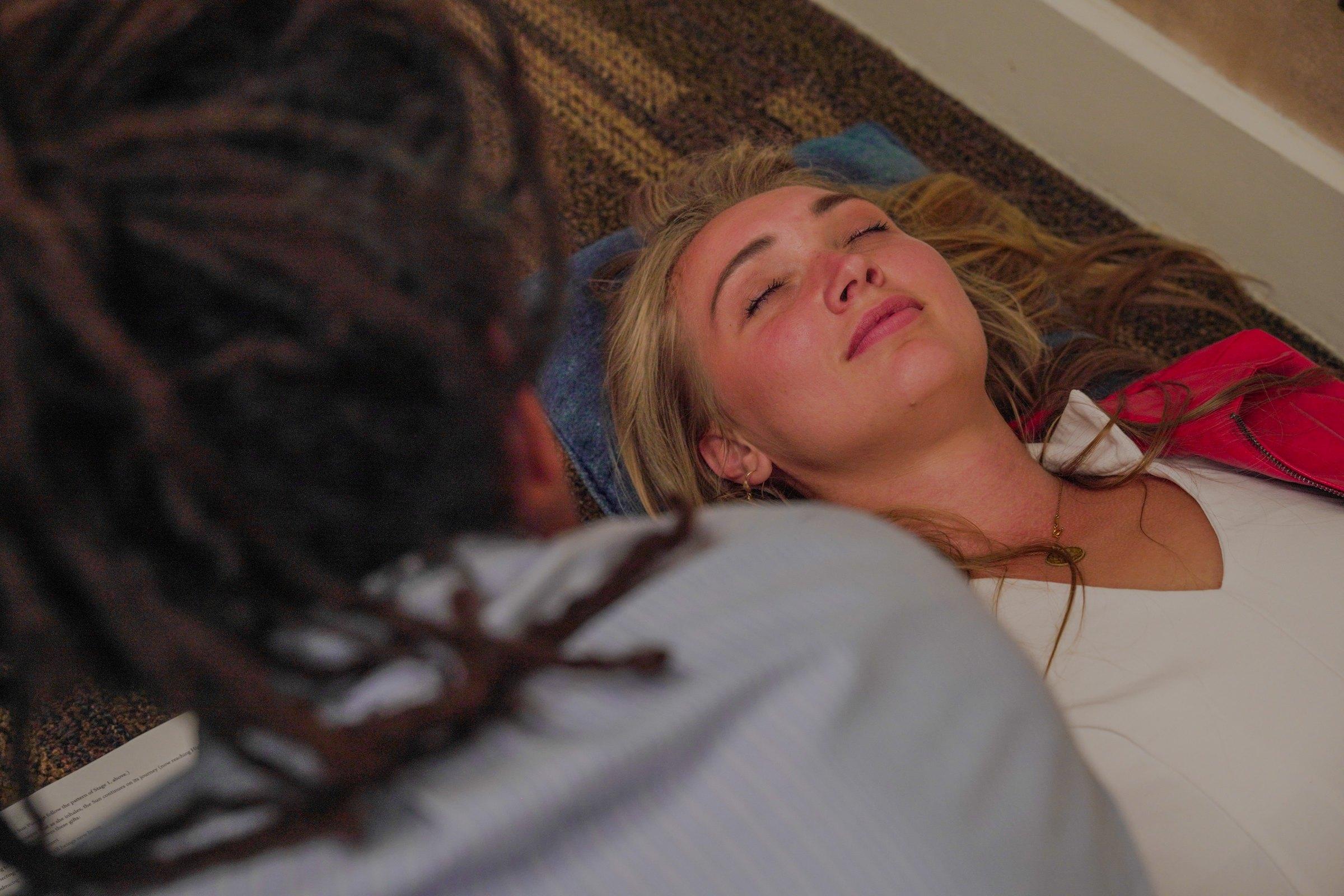
Picture a client in your chair. They came in carrying something they had lived with for years.
You listen and choose an approach that fits them. Then you respond to what emerges, with skill and care.
Near the end, there is a long breath. Sometimes tears, then a smile, and a sense of moving forward.
Moments like this are why people choose this work.
How to become a certified hypnotherapist
Complete HTI’s first four levels, 200 hours of training, and you are a Certified Hypnotherapist, eligible for certification with the American Council of Hypnotist Examiners (ACHE). Training standards vary widely, so where you train matters. HTI teaches every class day in person, so you watch real sessions, feel each method yourself, practice with faculty supervising and go deeper into the learning.
- Level 1 starts from the foundations, so you can begin with no background in hypnotherapy. On your first class day you meet your classmates, and practice guiding one of them into hypnosis.
- Weekends over about three months, so you keep your work week, or four weeks on the accelerated schedule.
- Two of Levels 5–7 lead to Certified Clinical Hypnotherapist, 300 hours.
- $1,245 per level. Pay one level at a time, or pay all four in full and save 3%, up to $249 with bank payment.
Facts reviewed November 2026.
Do you need a license to practice?
HTI certification is a professional credential, not a government license.
Most US states, California included, don’t require a state license to practice hypnotherapy, though a few ask you to register. Each sets its own rules, so check where you plan to work. In California, where HTI is based, you can practice without a state license under Business and Professions Code sections 2053.5 and 2053.6, as long as you don’t diagnose, prescribe or carry out other medical acts.
What California asks of you
Before the first session, each client reads and signs a plain-language disclosure that says you are not a licensed physician, that your services complement licensed health care and don’t replace it, and that those services are not licensed by the state. It also says what your services involve, the theory they’re based on, and your education, training and experience. Your advertising says you’re not licensed by the state as a healing arts practitioner, and you keep each signed form for three years. The training covers these rules.

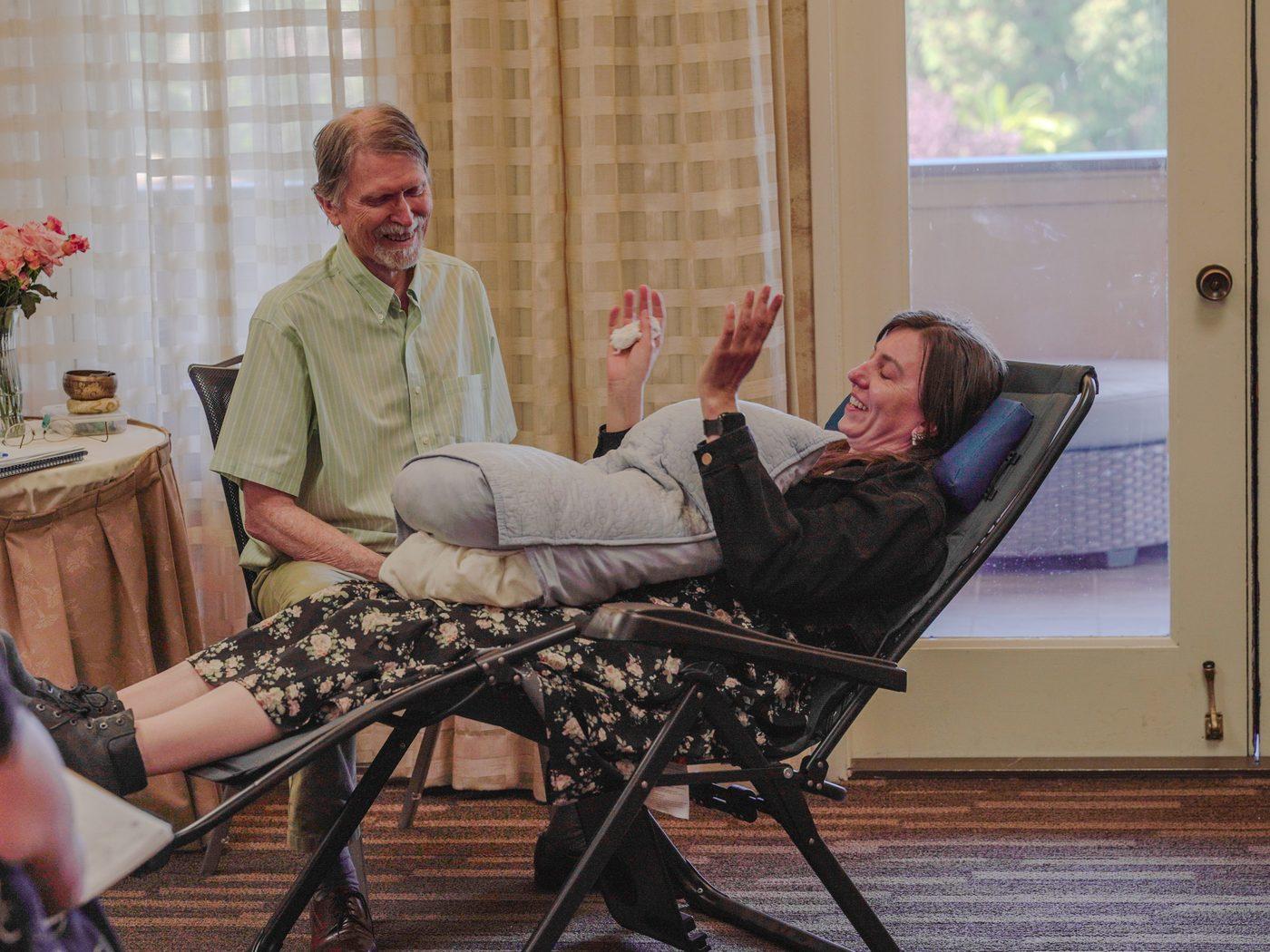
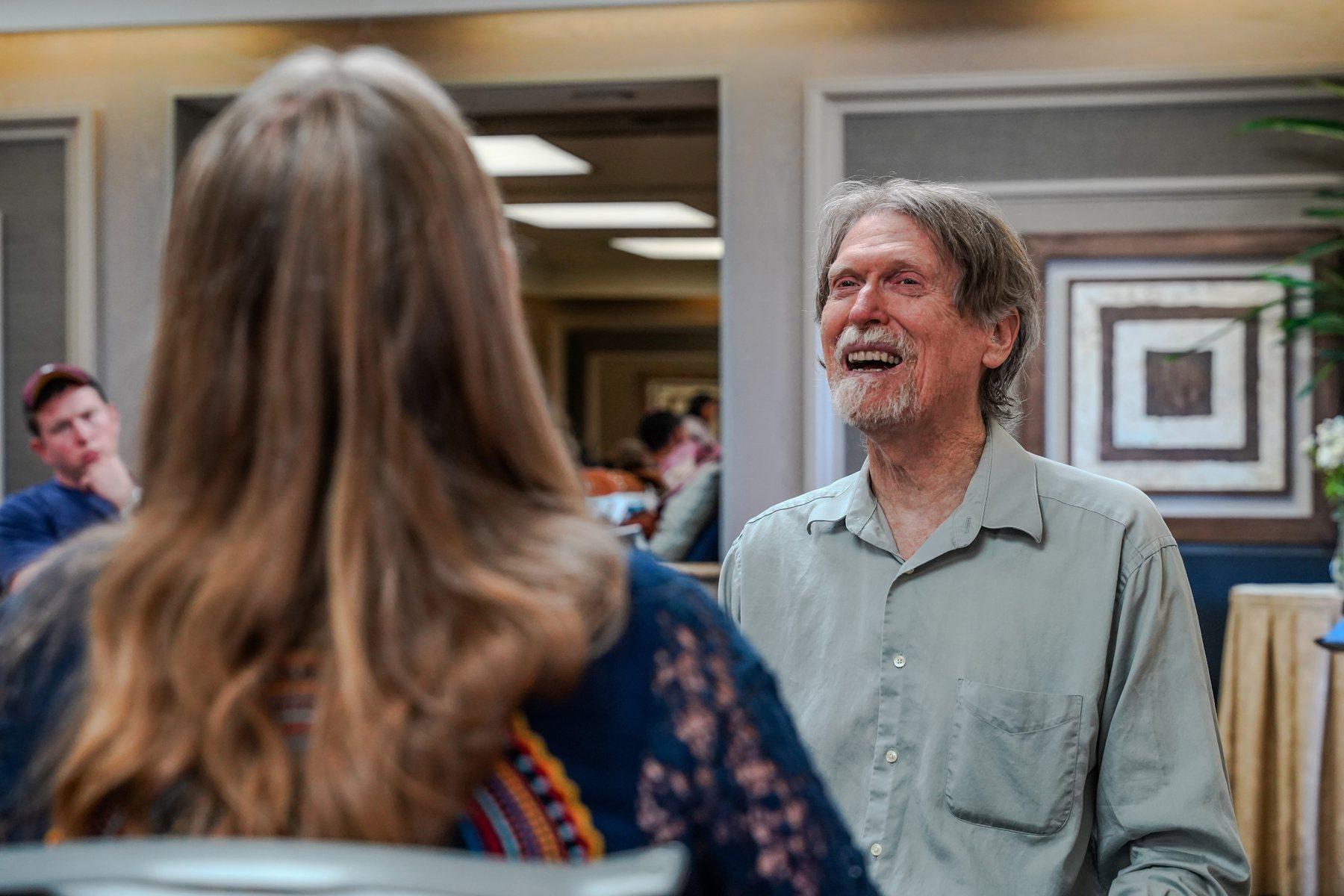
They went looking for something meaningful, and found it.
Faculty who run practices themselves teach the business side: registering your business, compliance, ethics, marketing, and caring for each client from first intake through review and referral.
“…in the two years since I came to HTI I have gone from not believing in myself to owning a thriving hypnotherapy practice…”
A sample of graduates’ own words, shared freely with no payment or incentive. Every experience is individual.
Free Introductory Meeting · 90 minutes on Zoom
Meet Randal before you decide
Founder Randal Churchill has conducted more than 50,000 hours of hypnotherapy sessions and still teaches about half of most levels. See how the training works, and ask him anything.
Free, with no obligation. It opens with a short guided relaxation, which is optional.
Becoming a hypnotherapist: your questions
How will I know when I’m ready to practice?
By Level 4 you run complete sessions with classmates, with faculty watching and giving feedback, so you see your own readiness. After Level 4 you’re a Certified Hypnotherapist, and Levels 3 and 4 cover starting a practice. Many who came for their own growth find they want to practice too, and the two sit well together: the inner work you do in class is part of what makes a skilled practitioner. Faculty are glad to talk with you about your next step.
Do I need any experience to start?
No. Level 1 begins with the foundations, and the four levels take you from your first induction to running complete sessions and handling complex cases with confidence. Many students start with no background in hypnotherapy, and others are therapists, nurses and coaches.
What if I’m not sure I’ll be good at this?
You practice every method with classmates, with faculty supervising, so your confidence grows with each level. If you’d like to talk it through first, bring your question to Randal at the Free Introductory Meeting.
Can I practice in other states or countries?
Often, yes. Rules differ from place to place, so check the requirements where you plan to work. HTI has graduates in 54 countries and all 50 states.
Can I work with clients online after the training?
Yes. Much of what you learn carries straight into sessions on Zoom, Teams or Google Meet, and you can be very effective online. Some signals are much harder to read through a screen, such as subtle shifts in energy, micro-expressions and the slightest ideomotor responses, so we prepare you for both. In Level 4 we discuss practicing hypnotherapy online and what to consider when you do, and faculty who run their own practices all work with clients online.
What makes HTI different?
Several things, together:
- Training refined over nearly 50 years. We keep refining what we teach and how we teach it, bringing in new methods and keeping what works. You get breadth across many methods, with real depth in each one.
- Critical thinking and a client-centered approach. You learn why each method works and when to use it, so you can think through each client’s case and adapt as the session unfolds.
- Regression in real depth. Randal Churchill wrote two teaching texts on regression hypnotherapy, and regression is taught step by step from Level 2 through the graduate levels.
- Methods developed here. Randal Churchill originated Hypnotic Dreamwork™ and developed Churchill’s Imprint Method™. Both are taught only at HTI, and you learn them from him. Most of our other teachers have developed methods of their own, and several are taught only here, such as Gaye Gibson’s Emotional Balancing Process™.
- Learning in the room. You watch live therapy demonstrations in every level, and give and receive each method, including those that use touch (always with permission). Up close, you learn to read a client’s subtlest responses, in a room set up for safety, privacy and focus.
- Experienced faculty. Every teacher brings thousands of hours of client work, and most bring decades of practice: more than two centuries of experience between them. The faculty is led by founder Randal Churchill, the first president of ACHE. Teachers supervise every practice, and you can speak with them privately on breaks.
- A class that becomes a community. You learn alongside the same group, many students form practice groups from the first days, and many graduates stay friends for life.
- Support that continues. Graduates can repeat class days or whole levels, go on to the graduate levels and continuing education, and get help starting a practice.
HTI has graduates in 54 countries and all 50 states.
What will I be able to call myself?
After Level 4 you are a Certified Hypnotherapist, with 200 hours of training, and eligible for ACHE certification.
How will I know I’m on track?
Faculty supervise your practice in every level and give you feedback as you go, so you always know how you’re doing. After each practice the class comes back together for your questions, and mornings start with a check-in on the reading, your own self-hypnosis and any practice between classes. This ongoing supervision and assessment is in line with ACHE’s requirements, and there are no letter grades. When a student needs extra support, we give it.
Your new career could begin as soon as March 27, 2027.
Since 1978 · ACHE-approved · 5,000+ trained